Choosing the best cloud certifications for beginners is difficult because every provider claims to be the right starting point. AWS, Azure, Google Cloud, Oracle, CompTIA, and Terraform all offer valid paths, but they do not serve the same learner type.
In 2026, cloud skills will be useful for students, IT learners, developers, data beginners, cybersecurity learners, freelancers, and non-technical professionals. The problem is not the lack of options. The real problem is knowing which entry-level cloud certs are worth your time, which ones match your career goal, and which ones are too advanced for your current level.
This guide gives you a practical cloud certification roadmap, compares AWS, Azure, and Google certs, and explains which certification makes sense for different learner types.
Quick Answer
The best cloud certifications for beginners in 2026 are AWS Certified Cloud Practitioner, Microsoft Azure Fundamentals, Google Cloud Digital Leader, Oracle Cloud Infrastructure Foundations Associate, Microsoft Azure Data Fundamentals, HashiCorp Terraform Associate, and CompTIA Cloud+. Complete beginners should start with AWS, Azure, Google Cloud, or Oracle foundations. Learners with Linux, networking, or DevOps interests can move toward Terraform or CompTIA Cloud+.
Who This Guide Is For
This guide is useful for:
- Students exploring cloud computing
- Beginners who want their first cloud certificate
- Working professionals moving into IT or cloud roles
- Non-technical professionals who work with cloud teams
- Developers planning to learn deployment and infrastructure
- IT learners who know basic networking or Linux
- Career switchers comparing AWS, Azure, and Google Cloud
- Freelancers who want cloud skills for client projects
- Data learners interested in cloud databases and analytics
- Cybersecurity beginners who want cloud security basics
How We Selected These Cloud Certifications
Provider credibility: We focused on recognized cloud and technology providers.
- Beginner friendliness: We gave priority to certifications that explain cloud concepts before advanced architecture.
- Practical relevance: We checked whether the certification maps to real cloud skills such as compute, storage, networking, identity, security, billing, and deployment.
- Tools and skills covered: We included provider platforms, cloud fundamentals, cloud data, infrastructure as code, and multi-cloud operations.
- Certificate value: We selected credentials that are known by learners, hiring teams, or technical communities.
- Career support: Most certification exams do not include placement support. Where no career service is clearly stated, we mention it honestly.
- Pricing transparency: We included exam fee details only where official pages clearly show them.
- Flexibility and duration: We prioritized self-paced preparation and exam formats suitable for beginners.
- India and USA relevance: We considered global recognition, employer familiarity, and availability for learners in India, the USA, and other markets.
- 2026 relevance: We avoided retired certifications and flagged credentials where exam versions may change.
Overview: Best Cloud Certifications for Beginners in 2026
| Learner Goal | Best Option |
| Best for complete beginners | AWS Certified Cloud Practitioner |
| Best for students | Microsoft Azure Fundamentals |
| Best for working professionals | Google Cloud Digital Leader |
| Best for India | AWS Cloud Practitioner or Azure Fundamentals |
| Best for USA | AWS Cloud Practitioner, Azure Fundamentals, or Google Cloud Digital Leader |
| Best for non-technical professionals | Google Cloud Digital Leader |
| Best for developers | Terraform Associate |
| Best for cloud data beginners | Azure Data Fundamentals |
| Best for low-budget learners | Oracle Cloud Infrastructure Foundations Associate |
| Best for certification value | AWS Cloud Practitioner, Azure Fundamentals, Google Cloud Digital Leader |
| Best after basic networking or Linux | CompTIA Cloud+ |
1. AWS Certified Cloud Practitioner | Amazon Web Services
AWS Certified Cloud Practitioner is one of the most popular entry-level cloud certs for beginners. It is designed for learners who want to understand AWS without going directly into architecture, DevOps, or security. The exam checks cloud concepts, AWS services, billing, pricing, shared responsibility, support plans, and basic security ideas. It is a strong first step if your goal is cloud support, cloud sales, technical coordination, entry-level cloud operations, or later AWS Solutions Architect Associate preparation.
- Best For: Complete beginners, students, IT learners, non-technical professionals, and career switchers who want AWS basics.
- Level: Beginner.
- Duration: The official exam duration is 90 minutes.
- Mode: Online proctored or test center exam.
- Certificate: Yes, AWS Certified Cloud Practitioner certification is available after passing the exam.
- Career / Placement Support: No placement support is clearly mentioned. This is a certification exam, not a placement program.
Skills Covered:
- Cloud concepts
- AWS global infrastructure
- Compute, storage, database, and networking basics
- AWS pricing and billing
- Shared responsibility model
- Basic cloud security
- AWS support plans
- Cloud migration concepts
Projects / Practical Learning:
The certification itself is exam-based. For practical learning, beginners should create a free-tier AWS account and practice launching an EC2 instance, creating an S3 bucket, setting IAM users, and checking billing alerts.
What Sets It Apart:
- Strong global recognition for AWS beginners
- Good first step before AWS Solutions Architect Associate
- Useful for both technical and non-technical roles
Who Should Choose This:
Choose this if you want a safe first cloud certification and plan to learn AWS in more detail later.
Who Should Avoid This:
Avoid this if you already have hands-on cloud experience and want a technical deployment certification. In that case, AWS Solutions Architect Associate may be a better next step.
Digital Exclude Verdict:
AWS Certified Cloud Practitioner is the best cloud certification for beginners who want a simple, recognized starting point. It does not make you job-ready alone, but it gives you the language and structure to continue toward cloud support, cloud operations, or AWS architecture learning.
2. Microsoft Certified: Azure Fundamentals | Microsoft
Microsoft Certified: Azure Fundamentals, also known as AZ-900, is a beginner-friendly certification for learners who want to understand Microsoft Azure and general cloud concepts. It covers cloud models, Azure architecture, core Azure services, management, governance, identity, pricing, and compliance basics. It is useful for students, support professionals, business analysts, IT learners, and working professionals in companies that use Microsoft products. For many beginners in India and the USA, Azure Fundamentals is a practical first choice because Azure is widely used in enterprise environments.
- Best For: Students, beginners, working professionals, and Microsoft ecosystem learners.
- Level: Beginner.
- Duration: Check the official Microsoft exam page for the latest exam duration and scheduling details.
- Mode: Online proctored or test center exam, depending on region and availability.
- Certificate: Yes, Microsoft Certified: Azure Fundamentals is available after passing AZ-900. Microsoft fundamentals certifications do not expire according to Microsoft’s credential policy.
- Career / Placement Support:
No placement support is clearly mentioned. Microsoft Learn provides learning resources, but the exam does not include job placement.
Skills Covered:
- Cloud concepts
- Azure architecture
- Azure compute, storage, and networking basics
- Identity and access basics
- Azure management and governance
- Pricing and support
- Security and compliance fundamentals
Projects / Practical Learning:
Microsoft Learn offers free learning modules. Beginners should also practice with the Azure portal, create a resource group, explore virtual machines, set budgets, and understand basic identity settings.
What Sets It Apart:
- Strong fit for enterprise IT environments
- Free Microsoft Learn preparation resources
- Good starting point before Azure Administrator Associate
Who Should Choose This:
Choose this if your target companies use Microsoft Azure, Microsoft 365, Power BI, Dynamics, or enterprise IT systems.
Who Should Avoid This:
Avoid this if your goal is only AWS or Google Cloud. The general cloud basics still help, but provider-specific learning matters.
Digital Exclude Verdict:
Azure Fundamentals is one of the strongest choices for beginners who want cloud knowledge with enterprise relevance. It is especially useful for students and working professionals who want a practical cloud certificate without starting with a difficult admin exam.
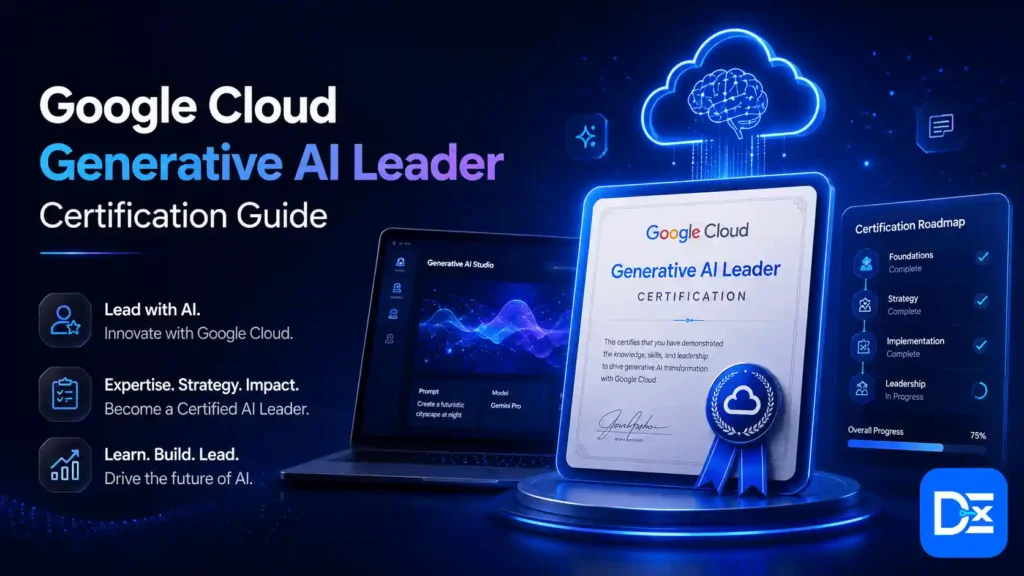
3. Google Cloud Digital Leader | Google Cloud
Google Cloud Digital Leader is a beginner-level certification focused on cloud value, digital transformation, data, AI, security, and Google Cloud capabilities. It is less technical than many engineering exams, which makes it useful for non-technical professionals, managers, founders, business analysts, and learners who work with cloud teams. It does not replace hands-on engineering practice, but it helps beginners understand why organizations use the cloud, how Google Cloud services support business goals, and how the cloud connects with data and AI.
- Best For: Non-technical professionals, business learners, founders, managers, and cloud beginners.
- Level: Beginner.
- Duration: The official exam duration is 90 minutes.
- Mode: Online proctored or onsite proctored exam.
- Certificate: Yes, Google Cloud Digital Leader certification is available after passing the exam. Google lists a validity period of 3 years.
- Career / Placement Support: No placement support is clearly mentioned.
Skills Covered:
- Cloud transformation concepts
- Google Cloud products and services
- Data and AI basics
- Cloud security and compliance
- Infrastructure modernization
- Business use cases for cloud
- Cost and value thinking
Projects / Practical Learning:
This certification is more conceptual than lab-focused. Learners should add hands-on practice through Google Cloud Skills Boost labs, basic cloud storage exercises, and simple data or AI demos.
What Sets It Apart:
- Strong for business and non-technical learners
- Covers cloud, data, AI, and security at a high level
- Useful for people who coordinate with technical teams
Who Should Choose This:
Choose this if you need cloud fluency for business, product, consulting, operations, or management roles.
Who Should Avoid This:
Avoid this if you want a deeply technical cloud engineering credential. It is not designed to prove hands-on administration skills.
Digital Exclude Verdict:
Google Cloud Digital Leader is a smart beginner certification for non-technical professionals. It is not the most technical option, but it is valuable for understanding cloud strategy and Google Cloud’s role in data and AI-driven businesses.
4. Oracle Cloud Infrastructure Foundations Associate | Oracle
Oracle Cloud Infrastructure Foundations Associate is a beginner-friendly certification for learners who want to understand OCI basics. It covers cloud concepts, OCI services, security, identity, networking, compute, storage, databases, pricing, and support. Oracle cloud skills can be useful for learners targeting companies that use Oracle databases, ERP systems, enterprise applications, or OCI. One important note for 2026: Oracle updates its exam versions, so learners should always check the latest active version before registering.
- Best For: Low-budget learners, Oracle ecosystem beginners, students, and enterprise IT learners.
- Level: Beginner.
- Duration: The Oracle Cloud Infrastructure 2025 Foundations Associate exam page lists a 60-minute exam. Check the latest Oracle page because new versions may replace older exams.
- Mode: Online certification exam.
- Certificate: Yes, Oracle Cloud Infrastructure Foundations Associate credential is available after passing the exam.
- Career / Placement Support: No placement support is clearly mentioned.
Skills Covered:
- Cloud fundamentals
- OCI core services
- Compute, storage, and networking basics
- Identity and access management
- Security fundamentals
- Databases on OCI
- Billing and pricing basics
Projects / Practical Learning:
Learners should use Oracle learning resources and practice with basic OCI services where free-tier access is available. Good practice tasks include creating a compartment, reviewing IAM policies, exploring compute, and understanding database options.
What Sets It Apart:
- Useful for Oracle database and enterprise application environments
- Often attractive for low-budget learners when free exam access is available
- Good cloud foundation outside AWS, Azure, and Google Cloud
Who Should Choose This:
Choose this if you are interested in Oracle Cloud, Oracle databases, enterprise IT, or companies that use Oracle systems.
Who Should Avoid This:
Avoid this as your only cloud certification if your target jobs mainly ask for AWS, Azure, or Google Cloud.
Digital Exclude Verdict:
Oracle Cloud Infrastructure Foundations Associate is a practical beginner certification, especially for learners connected to Oracle environments. It is a good low-cost option, but learners should verify the current exam version before publishing or enrolling.
5. Microsoft Certified: Azure Data Fundamentals | Microsoft
Microsoft Certified: Azure Data Fundamentals, also known as DP-900, is a beginner certification for learners who want to understand cloud data services. It is not a general cloud computing exam like AZ-900. Instead, it focuses on relational data, non-relational data, analytics workloads, and Azure data services. This makes it useful for students, data science beginners, Power BI learners, database beginners, and professionals who want to connect cloud learning with data careers.
Best For: Data beginners, analytics learners, Power BI users, database learners, and students.
Level: Beginner.
Duration: Check the official Microsoft exam page for the latest exam duration and scheduling details.
Mode: Online proctored or test center exam, depending on region and availability.
Certificate: Yes, Microsoft Certified: Azure Data Fundamentals is available after passing DP-900.
Career / Placement Support: No placement support is clearly mentioned.
Skills Covered:
- Core data concepts
- Relational data on Azure
- Non-relational data on Azure
- Analytics workloads
- Azure SQL basics
- Data storage concepts
- Big data and analytics basics
Projects / Practical Learning:
Beginners should practice with Azure SQL basics, sample databases, storage concepts, and simple analytics workflows. If you are planning a data career, pair DP-900 with SQL practice and one dashboard project.
What Sets It Apart:
- Strong fit for data and analytics learners
- Good bridge between cloud and data science
- Useful before Azure database, analytics, or Power BI learning
Who Should Choose This:
Choose this if your cloud interest is linked to data, analytics, databases, or BI roles.
Who Should Avoid This:
Avoid this as your first certification if you do not yet understand basic cloud concepts. AZ-900 is a better starting point for general cloud knowledge.
Digital Exclude Verdict:
Azure Data Fundamentals is not the first cloud certification for everyone, but it is excellent for data-focused beginners. If your career goal is data analyst, BI analyst, data engineer, or cloud data support, DP-900 can be a useful early credential.
6. HashiCorp Certified: Terraform Associate | HashiCorp
HashiCorp Certified: Terraform Associate is a cloud adjacent certification focused on infrastructure as code. It is not tied to one cloud provider, which makes it useful for learners who want to manage AWS, Azure, Google Cloud, or hybrid infrastructure using Terraform. The exam checks Terraform workflow, providers, state, modules, variables, configuration, and HCP Terraform basics. It is beginner-friendly only if you already understand basic cloud, terminal usage, and infrastructure concepts.
- Best For: Developers, DevOps beginners, cloud engineering learners, and infrastructure learners.
- Level: Beginner to intermediate.
- Duration: The official Terraform Associate exam duration is 1 hour.
- Mode: Online proctored exam.
- Certificate: Yes, HashiCorp Certified: Terraform Associate certification is available after passing the exam. The credential expiration is listed as 2 years.
- Career / Placement Support: No placement support is clearly mentioned.
Skills Covered:
- Infrastructure as code
- Terraform workflow
- Providers and resources
- Terraform state
- Variables and outputs
- Modules
- Remote state basics
- HCP Terraform basics
- Multi-cloud infrastructure concepts
Projects / Practical Learning:
This certification becomes valuable when paired with practice. Build a small Terraform project that provisions a cloud storage bucket, virtual network, compute instance, and IAM policy in a test account.
What Sets It Apart:
- Multi-cloud relevance
- Strong for DevOps and cloud engineering paths
- Practical skill beyond basic cloud theory
Who Should Choose This:
Choose this after learning basic cloud services and terminal commands. It is a good step for developers who want to move toward DevOps or cloud engineering.
Who Should Avoid This:
Avoid this as your first cloud certification if you do not yet understand compute, storage, networking, and IAM basics.
Digital Exclude Verdict:
Terraform Associate is a strong second certification, not the safest first one. Beginners should first complete AWS, Azure, or Google Cloud fundamentals, then use Terraform to build real infrastructure projects.
7. CompTIA Cloud+ | CompTIA
CompTIA Cloud+ is a vendor-neutral certification focused on cloud infrastructure, deployment, security, operations, automation, troubleshooting, and high availability. It is more technical than AWS Cloud Practitioner, Azure Fundamentals, or Google Cloud Digital Leader. CompTIA officially recommends hands-on experience as a systems administrator or cloud engineer, so complete beginners should treat Cloud+ as a later step. Still, it belongs in this list because it is useful for learners who already know basic IT, networking, Linux, or systems administration.
Best For: IT learners, support professionals, networking learners, system administrators, and cloud operations beginners.
Level: Intermediate.
Duration: The official Cloud+ CV0-004 exam duration is 90 minutes.
Mode: Certification exam with multiple-choice and performance-based questions.
Certificate: Yes, CompTIA Cloud+ certification is available after passing the exam.
Career / Placement Support: No placement support is clearly mentioned.
Skills Covered:
- Cloud architecture
- Cloud deployment
- Cloud operations
- Security
- Automation
- Virtualization
- Backup and recovery
- Troubleshooting
- High availability
- DevOps fundamentals
Projects / Practical Learning:
This certification is stronger when learners practice in labs. Build projects around virtual machines, cloud networking, backup policies, access control, monitoring, and basic automation.
What Sets It Apart:
- Vendor-neutral cloud certification
- More technical than most beginner cloud exams
- Useful for cloud operations and infrastructure support roles
Who Should Choose This:
Choose this if you already know basic networking, operating systems, virtualization, or IT support.
Who Should Avoid This:
Avoid this if you are a complete beginner with no IT foundation. Start with cloud fundamentals first.
Digital Exclude Verdict:
CompTIA Cloud+ is not the easiest beginner certification, but it is useful for learners who want vendor-neutral cloud operations skills. It is best after basic cloud, networking, and Linux learning.
Best Cloud Certification by Learner Type
| Learner Type | Recommended Certification | Why |
| Complete beginners | AWS Certified Cloud Practitioner | Simple, recognized, and cloud-focused |
| Students | Azure Fundamentals | Beginner-friendly and enterprise-relevant |
| Working professionals | Google Cloud Digital Leader | Good for business and cloud decision-making |
| Best with placement support | None from this list | Certifications do not usually include placement services |
| Best for India | AWS Cloud Practitioner or Azure Fundamentals | Strong demand, visibility, and learning resources |
| Best for USA | AWS, Azure, or Google Cloud | Commonly seen in cloud job descriptions |
| Non-technical professionals | Google Cloud Digital Leader | Less technical and business-focused |
| Developers | Terraform Associate | Useful for deployment and infrastructure automation |
| Low-budget learners | Oracle OCI Foundations Associate | Check current free exam availability |
| Portfolio projects | Terraform Associate | Encourages practical infrastructure work |
| Certification value | AWS, Azure, Google Cloud | Strong provider recognition |
Cloud Certification Roadmap for Beginners
Step 1: Learn Cloud Fundamentals
Start with basic cloud concepts. Understand public cloud, private cloud, hybrid cloud, IaaS, PaaS, SaaS, regions, availability zones, virtual machines, storage, databases, networking, identity, and billing.
Step 2: Learn Networking and Linux Basics
Cloud work becomes easier when you understand IP addresses, DNS, ports, firewalls, SSH, basic Linux commands, and file permissions. Do not skip this step if you want technical roles.
Step 3: Choose One Cloud Provider
Pick AWS, Azure, or Google Cloud as your first provider. Do not try to learn all three at once. AWS is a safe general choice, Azure is strong for enterprise IT, and Google Cloud is useful for data and AI-focused learners.
Step 4: Earn a Beginner Certification
Start with AWS Cloud Practitioner, Azure Fundamentals, Google Cloud Digital Leader, or OCI Foundations Associate. Use free official training resources before paying for third-party courses.
Step 5: Build Small Cloud Projects
Create projects such as:
- Static website hosting
- Cloud storage backup
- Virtual machine deployment
- Basic cloud database setup
- Identity and access policy demo
- Budget alert setup
- Simple serverless function
- Terraform-based infrastructure deployment
Step 6: Add a Role-Based Certification
After fundamentals, move toward AWS Solutions Architect Associate, Azure Administrator Associate, Google Associate Cloud Engineer, Terraform Associate, or CompTIA Cloud+, depending on your goal.
Step 7: Prepare Resume and Portfolio
Add certificate links, project screenshots, architecture diagrams, GitHub repositories, and short case studies. Explain what you built, which services you used, and what problem the project solved.
Step 8: Apply for Internships, Freelance Projects, or Entry Roles
Look for cloud support, junior cloud engineer, technical support, DevOps intern, IT support, cloud sales engineering, data support, or cloud operations roles. A certificate helps, but projects and interview clarity matter more.
How to Judge Placement and Career Support Honestly
Cloud certifications are not the same as placement programs. AWS, Microsoft, Google Cloud, Oracle, HashiCorp, and CompTIA mainly provide exams, learning resources, badges, and credentials. They do not usually promise jobs.
If you are joining a paid course or bootcamp for cloud certification preparation, check whether it offers:
- Resume review
- Mock interviews
- Career coaching
- Hiring partner access
- Job board support
- Referral assistance
- Portfolio review
- Cloud labs
- Capstone projects
- Interview preparation
Placement support is not guaranteed job placement. A provider may help you prepare, but your job result depends on skills, projects, communication, location, market demand, and interview performance.
Do not choose a cloud course only because it says job ready. Choose one that helps you build cloud skills, projects, confidence, and a clear role target.
Free vs Paid Cloud Courses: Which One Should You Choose?
Free courses are enough when you are learning cloud basics, comparing AWS, Azure, and Google certs, or preparing for a beginner exam using official resources. AWS Skill Builder, Microsoft Learn, Google Cloud Skills Boost, Oracle University, and HashiCorp tutorials can help learners start without a big budget.
Paid courses may be useful when you need structure, labs, mentor support, practice exams, live doubt sessions, projects, or career support. They can also help if you struggle to stay consistent alone.
Beginners should avoid expensive cloud programs until they know their goal. First, decide whether you want cloud support, cloud engineering, DevOps, cloud data, cloud security, or cloud architecture. Then choose a paid program only if it fits that path.
Mistakes to Avoid Before Choosing a Cloud Certification
Choosing Only by Brand Name
AWS, Azure, and Google Cloud are all valuable, but the right choice depends on your goal, target job market, and current skills.
Ignoring Projects
A certification without projects is weak. Build small cloud projects that show compute, storage, networking, IAM, billing, and deployment skills.
Believing Guaranteed Job Claims Without Verification
Certification providers rarely guarantee jobs. If a course claims placement, check the terms carefully.
Choosing Advanced Certifications Too Early
Do not start with associate or professional level cloud architecture exams if you do not know basic cloud services.
Ignoring Time Commitment
Even beginner certifications need consistent study. Plan at least a few weeks for fundamentals if the cloud is new to you.
Not Checking Certificate Recognition
A certificate is useful only when it matches your target role. For example, Terraform helps DevOps learners more than non-technical business users.
Not Building a Portfolio
Create at least three small projects before applying for cloud roles. Keep screenshots, diagrams, and GitHub notes ready.
Not Comparing India and USA Career Expectations
In India, many entry-level cloud roles expect Linux, networking, support skills, and hands on labs. In the USA, beginner cloud roles may also expect troubleshooting, ticketing, scripting, or customer support experience.
FAQs About Best Cloud Certifications for Beginners
1. Which cloud certification is best for beginners in 2026?
AWS Certified Cloud Practitioner is the safest first choice for most beginners. Azure Fundamentals is better if your target companies use Microsoft systems. Google Cloud Digital Leader is better for non-technical professionals, business users, and cloud strategy learners.
2. Should I start with AWS, Azure, or Google Cloud?
Start with AWS if you want broad cloud exposure. Choose Azure if you are interested in enterprise IT, Microsoft tools, or corporate environments. Choose Google Cloud if you are interested in data, AI, analytics, or business cloud transformation.
3. Do beginner cloud certifications offer placement support?
Most beginner cloud certifications do not offer placement support. They validate knowledge through an exam. If you need resume help, mock interviews, job assistance, or hiring support, check a separate course or bootcamp and verify its claims.
4. Is a cloud certificate enough to get a job?
No. A cloud certificate helps, but it is not enough by itself. Employers also look for projects, labs, troubleshooting ability, networking basics, Linux knowledge, communication skills, and role-specific practice.
5. Can non-technical learners start cloud certification?
Yes. Non-technical learners can start with Google Cloud Digital Leader, AWS Cloud Practitioner, or Azure Fundamentals. They should learn cloud concepts first and avoid technical admin exams until they understand basic cloud services.
Conclusion
The best cloud certifications for beginners depend on your career goal, not just the provider name. AWS Certified Cloud Practitioner is the best general starting point, Azure Fundamentals is strong for enterprise IT, Google Cloud Digital Leader is useful for business and non-technical learners, and Oracle OCI Foundations Associate can be a good low-budget option if the current exam version is active.
If you already understand cloud basics, Terraform Associate and CompTIA Cloud+ can help you move toward DevOps, infrastructure, and cloud operations. If you are interested in analytics, Azure Data Fundamentals is a better fit than a general cloud exam.
Start with one certification, build small projects, and then choose your next step based on the role you want. A cloud certificate can open the door, but practical work is what helps you stand out.